Your home’s foundation does more than hold up walls—it keeps your entire structure safe, level, and dry. But when something goes wrong beneath the surface, the signs can sneak up slowly. A crack here, a sticking door there—it’s easy to overlook early warning signs of foundation problems until serious damage occurs.
This guide covers the 10 most common signs of foundation problems, what they mean, and how to fix them before they turn into expensive repairs. If you live in Alabama, where expansive soil and humidity put added pressure on homes, this is essential reading.
1. Cracks in Walls or Ceilings
Hairline cracks might be harmless, but wider cracks—especially those at 45-degree angles or that run in a stair-step pattern—can signal foundation movement. Look for cracks near windows, doors, or where the ceiling meets the wall.
What it could mean: Foundation settlement or shifting.
Fix: Structural repair using piers or wall reinforcement.
2. Uneven or Sloping Floors
If your floors feel slanted or “bouncy” underfoot, that’s often a sign of weakened support in your crawl space or basement—or worse, foundation sinking.
What it could mean: Joist failure, pier movement, or soil settlement.
Fix: Crawl space jacks, joist replacement, or pier installation.
3. Doors and Windows That Stick or Don’t Latch
Difficulty opening or closing doors and windows often means the frame has shifted. This is one of the most overlooked signs of foundation problems.
What it could mean: Foundation is no longer level.
Fix: Releveling with piers, and in some cases, crawl space structural reinforcement.

4. Gaps Around Window Frames or Doorways
Are there visible spaces where walls no longer meet trim or window casings? These are warning signs that your home’s frame is pulling apart due to movement below.
What it could mean: Foundation settlement or lateral wall pressure.
Fix: Foundation stabilization using push piers or wall anchors.
5. Bowing or Leaning Basement Walls
This is a serious red flag. When your basement walls curve inward or lean, it means the soil is pressing against them with too much force.
What it could mean: Hydrostatic pressure caused by poor drainage.
Fix: Wall anchors, carbon fiber straps, or interior drain systems.
6. Water in the Basement or Crawl Space
A little water in your basement or crawl space can be a warning sign of bigger problems—like cracks in your foundation or poor drainage outside. If ignored, that moisture can lead to mold, wood rot, and unhealthy air in your home.
That’s why it’s important to act early and seal your basement the right way—stopping moisture before it becomes a serious issue. It’s a practical step that strengthens your home’s structure and improves indoor air quality.
What it could mean: Cracks in foundation walls or poor waterproofing.
Fix: Interior drainage, sump pumps, vapor barriers, and exterior grading.

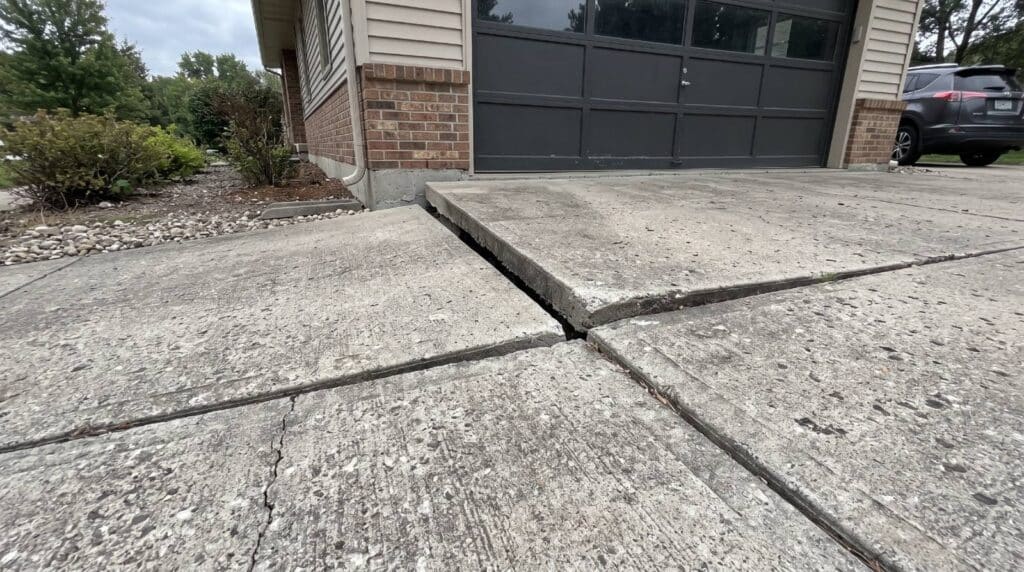
7. Foundation Cracks
Cracks in your actual foundation—visible on the exterior concrete or block walls—are among the clearest signs of a problem. Horizontal cracks are particularly serious.
What it could mean: Settlement, pressure from soil, or structural stress.
Fix: Foundation piers, crack sealing, and structural repair.
8. Chimney Pulling Away from the House
A leaning or separating chimney often signals uneven settlement beneath part of your foundation. This can quickly lead to collapse or falling bricks.
What it could mean: Soil erosion or foundation failure.
Fix: Helical or push piers to lift and relevel.
9. Cracked Tile or Hardwood Floors
When the subfloor moves, hard flooring materials can crack or separate. This is especially common in kitchens, entryways, and bathrooms.
What it could mean: Uneven foundation or crawl space issues.
Fix: Subfloor stabilization and joist reinforcement.
10. Mold, Musty Smells, or High Humidity
Crawl spaces and basements with poor drainage or unsealed ground allow moisture to build up. This can lead to rot and even respiratory issues for your family.
What it could mean: Moisture intrusion from cracked foundation or poor ventilation.
Fix: CrawlSeal encapsulation system, dehumidifiers, and waterproofing.
What Causes Foundation Problems?
Alabama homes face unique challenges due to expansive clay soils, frequent rain, and humidity. Most foundation issues are caused by:
- Soil shrinkage and expansion
- Poor drainage or grading
- Inadequate crawl space supports
- Tree roots absorbing moisture near the foundation
- Plumbing leaks beneath slabs
Understanding the cause is key to choosing the right fix—and APS Foundation Repair is here to help you do just that.
How APS Foundation Repair Fixes the Problem
For more than 45 years, APS has specialized in identifying and correcting all types of foundation problems. Our solutions include:
- Helical & Push Piers – Lift and stabilize settling foundations
- Wall Anchors & Carbon Fiber Reinforcement – Stop bowing and leaning walls
- Crawl Space Repair – Floor joist replacement, jacks, and wood rot repair
- Basement & Crawl Space Waterproofing – Sump pumps, vapor barriers, and drainage
- CrawlSeal Encapsulation – Block ground moisture and improve air quality
Every solution comes with a free initial inspection, clear pricing, and industry-leading warranties.
Don’t Ignore the Signs—Take Action Now
Foundation issues never fix themselves. The earlier you catch and repair the signs, the more affordable and effective the solution. Ignoring the warning signs can lead to major structural damage, health risks, and lost home value.
Not sure if your home is showing signs of foundation problems?
Let APS Foundation Repair give you peace of mind. Schedule Your Free Inspection Today!