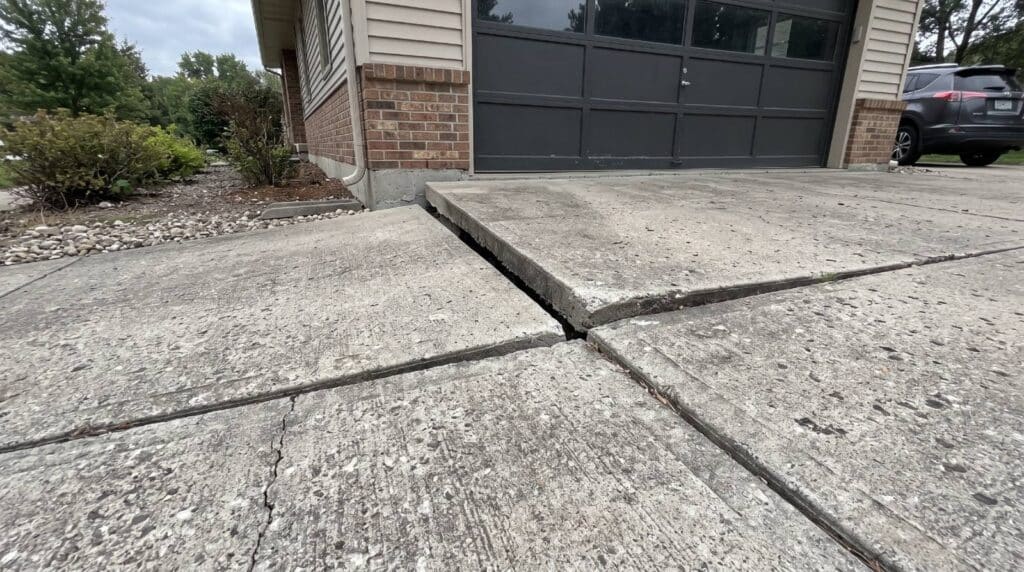
Uneven floors might look like a small inconvenience, but your floors are the first to tell you something’s wrong. That tiny slope you notice in your floors is waving a red flag.
You don’t need a brand-new slab. Concrete leveling lets you keep what you’ve got, lifting it back into place and locking it down so it stays put. Quick, clean, and surprisingly precise.
In this guide, we’ll walk through why floors go uneven, what happens if you ignore it and how the leveling works. Also, we explore the benefits of choosing the right experts to get the job done right.
What is Concrete Leveling?
Concrete floor leveling fixes your uneven or sunken concrete surfaces without completely replacing them. Instead of breaking it all out and starting fresh, the process lifts and stabilizes the existing concrete by filling the space underneath.
Why Floors Become Uneven
Uneven floors aren’t just ugly. They’re tattletales. They’re pointing to something happening under your house, and it usually isn’t good.
1) Soil Movement and Settlement
Different soils behave differently. Clay swells up like a sponge when wet and shrivels when dry. Sandy soil doesn’t hold water well, so it erodes faster. Over time, these properties weaken the ground, causing slabs or foundations to sink in spots.
According to the Florida Department of Environmental Protection, expansive clays absorb water and swell during rainfall, then shrink during drought. That constant push and pull slowly yanks at your foundation until floors tilt, walls crack, and jamming doors.
2) Water-Related Issues
- Poor Drainage: If your downspouts are missing or gutters are clogged, rain doesn’t get sent away from the house; it goes straight into the soil. And soil that’s too wet can’t hold weight.
- Leaks: Broken water lines or sewer pipes underground can wash soil away quietly for years before uneven floors appear.
- Flooding: Heavy storms or high water tables can oversaturate the soil, turning firm dirt into mud that can’t support concrete.
3) Environmental and Natural Factors
- Tree Roots: Large trees close to a foundation can pull moisture from the soil, drying it out unevenly.
- Freeze–Thaw Cycles: If you live where it freezes, ice in the ground swells up in winter, then melts and leaves empty pockets behind.
- Earthquakes or Vibrations: Even mild seismic activity or constant vibrations from nearby traffic can shake the ground enough to shift things.
4) Human Activity
- Poor Compaction: If the builder didn’t pack the soil tightly before pouring the foundation, that ground will compress over time.
- Excavation or Construction Nearby: Digging for pools, additions, or city utility work can throw off soil balance under your place.
Risks of Ignoring Uneven Floors
A crooked floor might look like an eyesore, but you’re asking for trouble if you shrug it off.
Here’s what happens when you pretend it’s “no big deal.”
- Safety Hazards: Uneven surfaces create trip-and-fall risks, especially for kids, older adults, or anyone with mobility issues. What starts as a small dip in the floor can become a serious injury risk.
- Structural Damage: As the foundation shifts, it drags the entire home. Walls crack, ceilings split, doors stick, windows jam. Your home starts fighting you every time you try to live in it.
- Plumbing and Utility Problems: When your foundation shifts, it tugs on the plumbing underneath. Pipe leaks or breaks. Electrical wiring and HVAC systems may also be affected if walls or floors shift.
- Water Intrusion: An uneven slab leaves gaps; perfect for rainwater to collect on or enter in. Once water enters, mold follows. Then comes rot, bad smells, and a lot of ruined flooring. This is why basement waterproofing and crawl space encapsulation are critical.
- Reduced Property Value: Home buyers see uneven floors as a red flag. To them, it screams “expensive structural repair.” In the best case, they’ll expect a discount. Worst case, they walk away entirely.
Understanding How Concrete Leveling Works
Concrete leveling gives a sunken slab a gentle push up without tearing it out and replacing it. Instead of treating the floor as the problem, it focuses on fixing what’s underneath.
Here’s the whole process:
- Inspection and Assessment: A contractor first inspects the area to figure out why the slab sank in the first place. Is it bad soil? Water sneaking around? Or just years of settling? This helps determine the best leveling method.
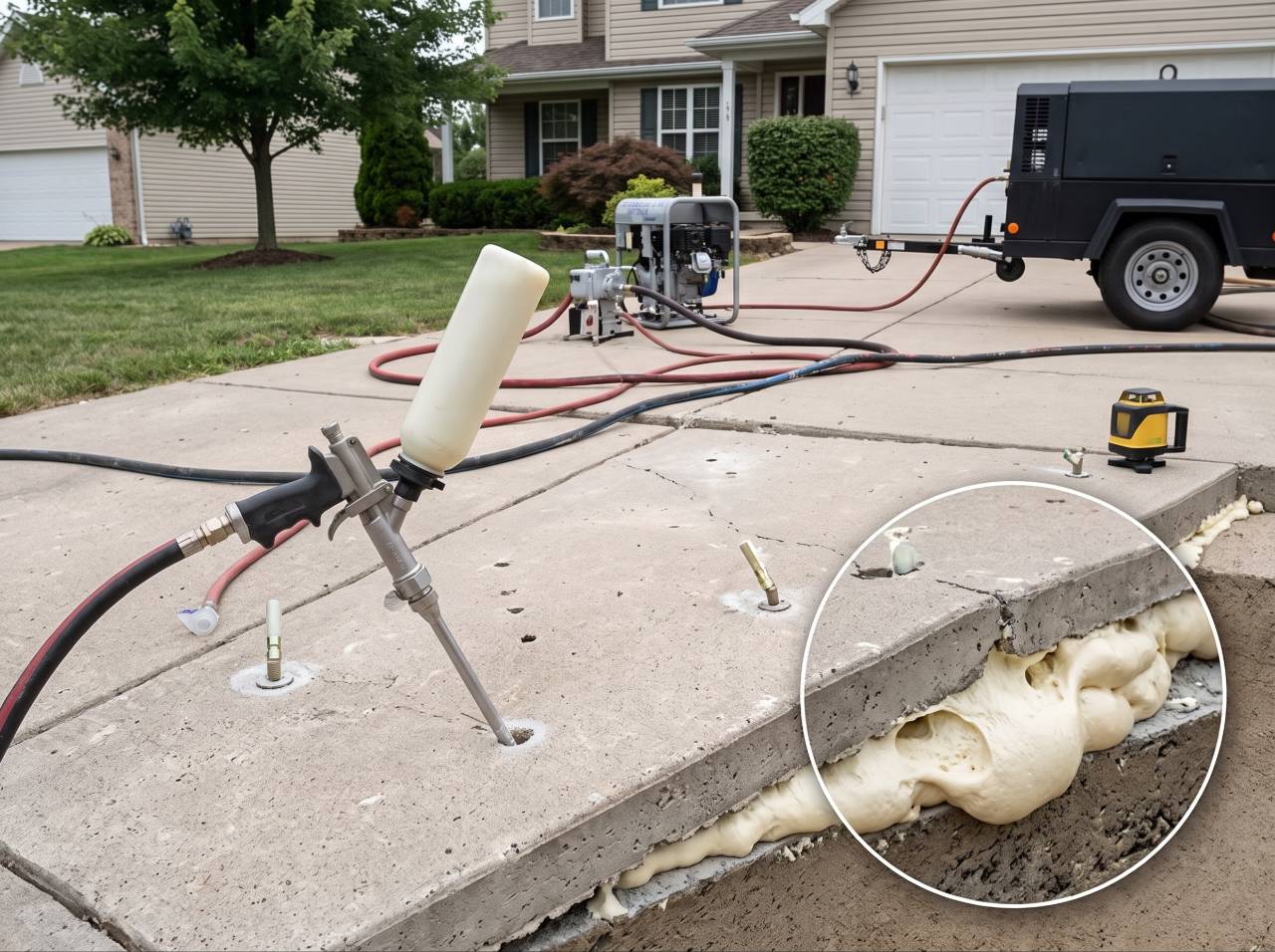
- Drilling Small Holes: Instead of smashing the slab into pieces, they drill holes about the size of a quarter. Think of it as giving the concrete a couple of injection sites.
- Pumping Material Under the Slab: Contractors commonly lift a sunken slab in one of two ways. Mudjacking is a process where a cement-based mix is pumped beneath the slab to fill gaps and raise it. Foam injection is a leveling method where lightweight foam expands under the slab for a precise lift and hardens quickly, and is often ready to use the same day.
- Sealing and Finishing: Once the slab’s sitting stable again, the holes are patched and sealed. The surface is ready for use again, often within hours.
Benefits of Concrete Leveling
Concrete leveling is tuning your slab instead of junking the whole slab. It is cheaper, faster, cleaner, safer, longer-lasting, and greener.
Here’s why it makes sense:
- Cost Savings: Ripping out and replacing concrete is pricey. Leveling usually costs a fraction of that.
- Time Efficiency: We’re not talking weeks of waiting. Most jobs wrap up in a few hours, and you can walk, park, or live on it the same day.
- Minimal Disruption: Instead of jackhammers and dumpsters, you get a few small holes and a patch job. No mountain of broken concrete to haul away.
- Safety Improvement: Crooked slabs are trip hazards waiting to happen. Leveling smooths things out so you’re not playing hopscotch whenever you walk to the car.
- Extended Lifespan: You lift the concrete and add life by fixing the ground underneath. The slab gets a second chance instead of an early retirement.
- Environmentally Friendly: Leveling reuses what’s there, which means less trash in landfills and fewer trucks hauling in new materials.
Signs You Need Concrete Leveling
Uneven concrete doesn’t hide forever. Your house and yard can drop hints, sometimes subtle, sometimes screaming in your face.
Here’s what to watch for:
- Visible Slopes or Sunken Areas: Drop a marble on your living room floor. If it rolls to the corner instead of staying put, your slab’s trying to tell you something. Floors should be flat, not a playground slide.
- Cracks in the Concrete: Concrete cracks naturally. But when you start seeing uneven gaps, widening cracks, or ones big enough to stick a coin in, that’s movement and losing support.
- Tripping Hazards: Raised edges between concrete sections create dangerous tripping points. You should address this early, especially in high-traffic areas.
- Water Pooling: If rainwater collects in little lakes on your patio or driveway, it’s a sign that the slab is sagging. Standing water accelerates erosion and slab deterioration.
- Sticking Doors and Windows: When your home’s foundation moves, your house shifts. They affect your floors and ripple through the entire structure. Doors won’t shut, and windows get stuck.
- Gaps Between Floors and Walls: Noticeable separations where floors pull away from baseboards or walls are a sign that your slab is pulling away, and will only widen.
- Uneven Interior Floors: Inside the home, if walking across your floor feels like walking over waves, that’s a warning sign. Homes aren’t supposed to feel like funhouses.
How APS Foundation Can Help
You can ignore uneven floors, cover them with a rug, or pretend it’s “just the house settling,” but eventually, the problem worsens.
At APS Foundation, we combine expertise and proven methods, such as:
- We Start with the Truth: APS looks beyond the visible signs of damage, checks the soil, the drainage, the foundation, and how your house is behaving as a whole. To give you an accurate and effective solution.
- We Customized Leveling Solutions: We explain each solution’s benefits, and empower you to choose the option that best fits your needs and budget.
- We Tackle More Than Floors: We don’t stop at concrete floor leveling. We also provide foundation repair, structural repair, crawl space repair, and basement waterproofing to protect your home long-term.
- We Think Long-Term: A well-level slab is only as strong as the ground beneath it. APS focuses on stabilizing the soil and fixing water problems, helping you avoid repeat repairs with warranties.
- We Know the Local Dirt, Literally: Alabama’s clay soils, heavy rains, and heat cycles aren’t new to us. We know how to fix issues so they stay fixed.
Alabama’s Leading Experts in Sunken Concrete Leveling
Uneven floors are a warning sign that something deeper is beneath your home.
Concrete floor leveling offers a proven, cost-effective way to restore your property’s safety, comfort, and value without the mess or expense of a full replacement.
If you’ve noticed sagging floors, cracks, or doors that don’t close properly, APS Foundation has the expertise, tools, and local knowledge to provide lasting solutions.
Request your free estimate today. We’ll inspect what’s going on and give you straight answers.